// blog
Top 10 Portfolio Monitoring Tools for 2026
You picked the names, the weights, and the thesis for a reason. Then the portfolio started moving, the headlines got louder, and a few months later you're staring at positions that still look fine on paper but no longer feel quite right. That's thesis drift, and it's why a good portfolio monitoring tool has to do more than track P&L. It needs to act like a discipline engine, surfacing whether each holding still fits the rule set that justified owning it in the first place.
The market has clearly moved portfolio oversight from a manual chore into a serious software category. Allvue says its portfolio monitoring platform is used by over 21,000 funds globally (Allvue portfolio monitoring), and the broader software market is now measured in the billions, with portfolio management software estimated at USD 3.73 billion in 2025 and projected to reach USD 8.32 billion by 2033 at 11.3% CAGR (Grand View Research). In private equity, AI-augmented monitoring has also moved into mainstream use, with 67% of mid-to-large PE firms with AUM above $1 billion deploying at least one such tool in 2025 (Market Intelo).
The right tool depends less on “best charts” and more on what kind of discipline you need. Some investors need a rules-based terminal that scores every holding against a written thesis. Others need dividend and tax reporting, or a clean net-worth dashboard, or research overlays on top of a portfolio view. If you care about thesis drift, strategy adherence, and alerting that leads to action, start with the tools below.
Table of Contents
- 1. Monsa
- Who it fits best
- Where it wins and where it doesn't
- 2. Koyfin
- Best use case
- Main trade-offs
- 3. Stock Rover
- Why it works for fundamentals-led investors
- Where it can get in the way
- 4. Sharesight
- Best fit
- Limits to be aware of
- 5. Morningstar Investor
- Where it fits
- The trade-off
- 6. Seeking Alpha Premium
- What it does well
- What can go wrong
- 7. Yahoo Finance Premium Portfolios AlphaSpace
- Why people keep using it
- Where it's weaker
- 8. Empower Personal Dashboard
- Where it helps most
- Where it falls short
- 9. Kubera
- Best for mixed books
- What to keep in mind
- 10. Quicken Classic Premier
- Why it still matters
- Where it's less comfortable
- Top 10 Portfolio Monitoring Tools Comparison
- How to Choose the Right Tool for Your Strategy
1. Monsa
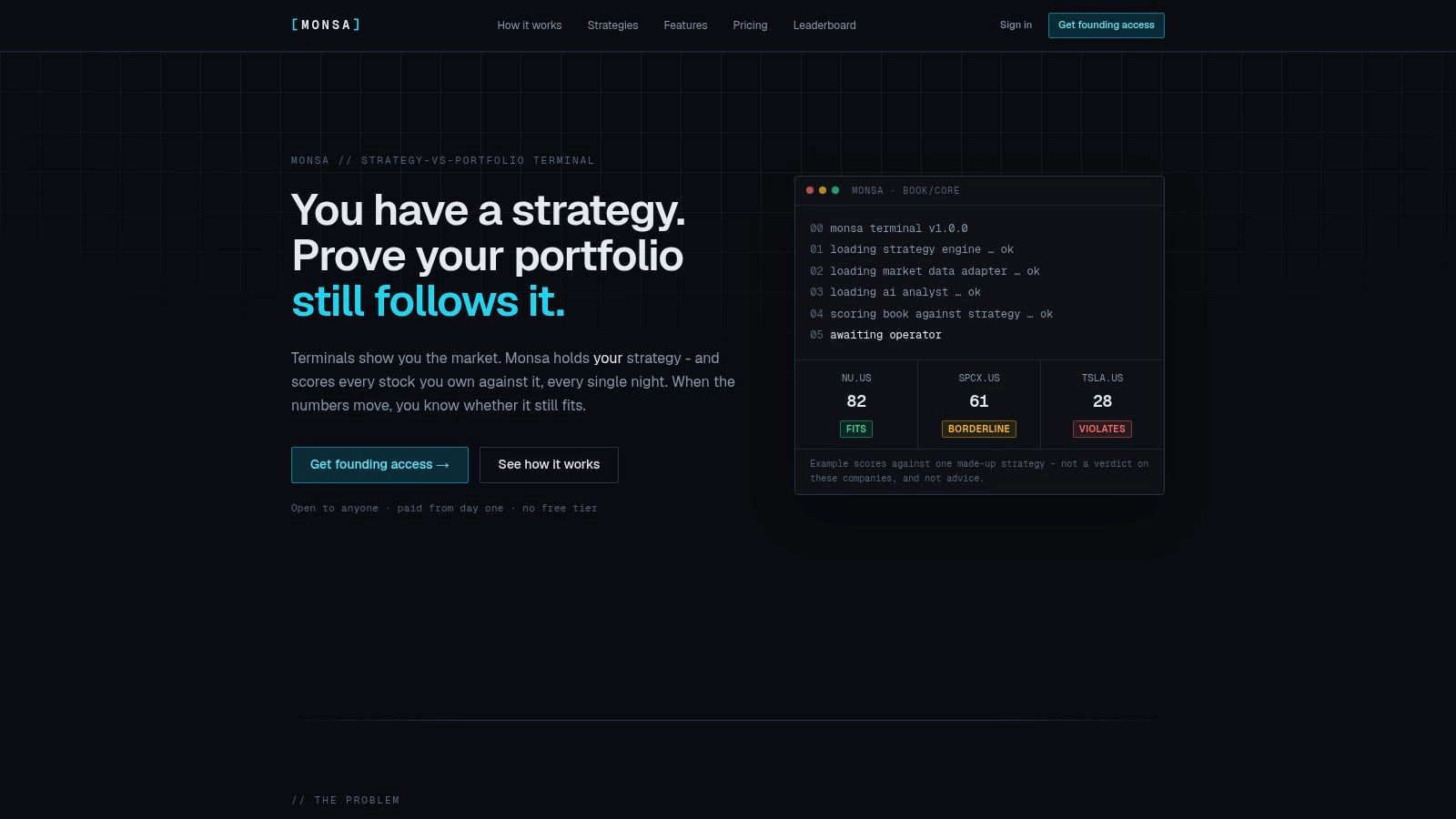
Monsa is the clearest thesis-aware tool in this list, which matters when a portfolio is supposed to follow a written process instead of drifting on gut feel. It stores the strategy you documented, converts that thesis into checkable rules, then re-scores each holding nightly against fresh end-of-day fundamentals, prices, and FX for US and major European exchanges. For investors who care about strategy adherence, that is the core monitoring problem. The question is not just whether a position is green or red, it is whether the company still fits the reason you bought it.
Practical rule: if a portfolio tool cannot show why a holding still qualifies, it is only giving you half the answer.
The product is built around explicit rule sets, with 10 editable templates such as GARP, Deep Value, Momentum, Wide Moat, and Dividend Growth, plus plain-English strategy capture for investors who do not want to start from a blank page. Each stock gets a 0-100 score with clear verdicts like fits, borderline, or violates, and the breakdown separates deterministic checks from AI judgments so you can see where the call came from. That transparency is the main reason Monsa stands out. It does not act like every investment question can be reduced to a single ratio, and it does not hide the judgment calls behind a polished dashboard. Monsa
Who it fits best
Monsa suits self-directed investors with a written process, independent PMs, small RIAs, investment clubs, and finance creators who publish thesis-driven analysis. It also works well for watch-only scoring, which lets you test whether a stock fits before you buy it. The platform keeps its scope tight on purpose, with a deliberately small number of parallel portfolios and tracked tickers, so it is built for focused books rather than broad institutional coverage.
Where it wins and where it doesn't
The main advantage is discipline. Nightly re-scoring keeps a position from drifting out of bounds, and portfolio-level constraints such as position and sector caps make the rules visible at the book level. Monsa also includes a monthly pool of AI analyses, which gives enough room for qualitative calls, what-would-change notes, and tear sheets when numeric checks alone do not settle the issue.
The trade-off is clear as well. Monsa is paid from day one, runs on end-of-day data, does not place trades, and does not claim backtests or performance attribution. If you need intraday execution, broad coverage across many securities, or a trading terminal, this is not the right fit. If you want a strategy-first portfolio monitoring tool that makes thesis drift obvious, Monsa is one of the sharper options available.
2. Koyfin
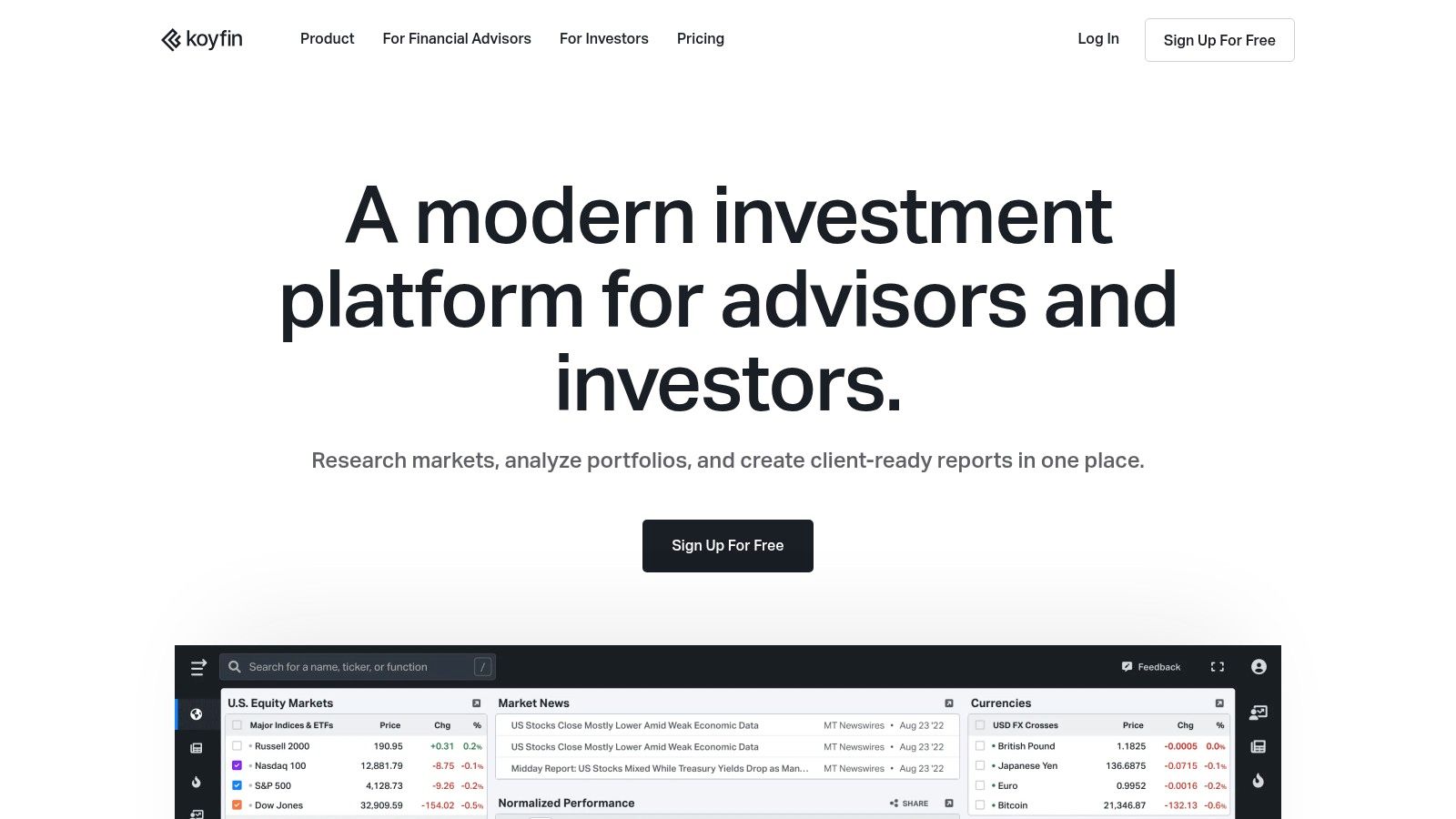
Koyfin is the platform I'd hand to an investor who wants more market context around a portfolio without losing sight of the holdings themselves. The My Portfolio feature sits inside a broader analytics environment, so you can look at exposure, allocation, overlap, news, filings, and alerts in one place. That makes it useful when you're trying to understand whether a position is drifting because of the company, the sector, or the macro tape.
Its strength is not just tracking, it's event coverage. Desktop, email, and mobile push alerts cover price moves, filings, transcripts, and news, which is more practical than price-only alerts for investors who care about catalysts and narrative shifts. Koyfin also fits people who like to keep research and monitoring close together, because the platform combines charting, fundamentals, transcripts, and model portfolios in a single workflow.
Best use case
Koyfin is a solid fit for self-directed equity investors who want institutional-style market context without jumping to a full research terminal. It's especially useful if you manage a small portfolio and want quick exposure checks before making a move. The advisor-oriented tiers matter too, because they support account imports and daily automated sync for client reporting.
Main trade-offs
The main weakness is that some integrations and client features sit behind higher-tier plans. Historical transaction handling can also feel less polished than the rest of the platform, which matters if you want your monitoring tool to double as a long-horizon records system. For investors who want an all-purpose market cockpit, Koyfin is strong. For strict thesis verification, it's more of a context layer than a rule engine.
For a direct comparison against Monsa, see the dedicated Monsa vs Koyfin breakdown.
3. Stock Rover
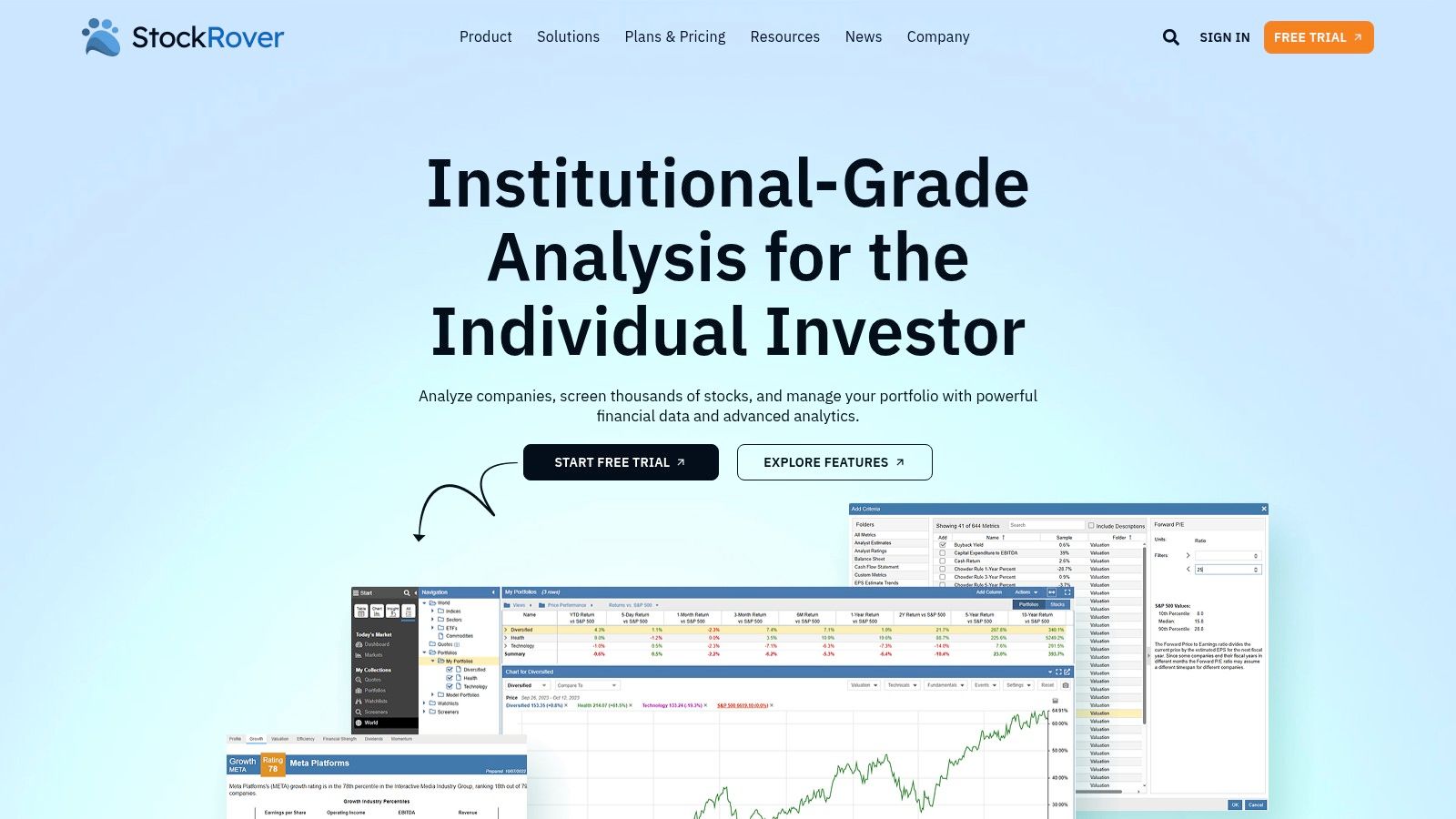
Stock Rover is the fundamentals-heavy choice on this list. It combines brokerage sync, alerts, scoring, screeners, and portfolio views, but its real identity is research depth. If your monitoring process is built around financial quality, valuation, and comparative screening, this platform gives you a lot of surface area to work with.
Why it works for fundamentals-led investors
The tool is built for investors who want to track a long list of metrics without constantly leaving the portfolio view. It includes an extensive fundamentals library and portfolio-level checks such as correlation and allocation views, which helps when you're trying to spot concentration before it becomes a problem. For long-term equity holders, that's often the difference between “I own a lot of good companies” and “I own too much of one factor disguised as diversification”.
If your process starts with the balance sheet and ends with a screening rule, Stock Rover is closer to your workflow than most general portfolio apps.
The platform scales from individual investors to advisors, so it's more flexible than a pure consumer tracker. It also makes sense for people who want screeners integrated into monitoring rather than bolted on separately.
Where it can get in the way
The same density that makes Stock Rover powerful can also make it tiring. The interface asks for attention, and the learning curve is real if you're not used to a lot of metrics on screen at once. Real-time quote availability also depends on plan and availability, so investors who want continuous market watching should check whether the data cadence matches their habits.
For monitoring a fundamentals-first book, Stock Rover is strong. For thesis drift in the deeper strategic sense, it still leans more toward “what changed in the numbers” than “does the stock still belong in the original framework”.
For a dedicated comparison, use the Monsa vs Stock Rover guide.
4. Sharesight
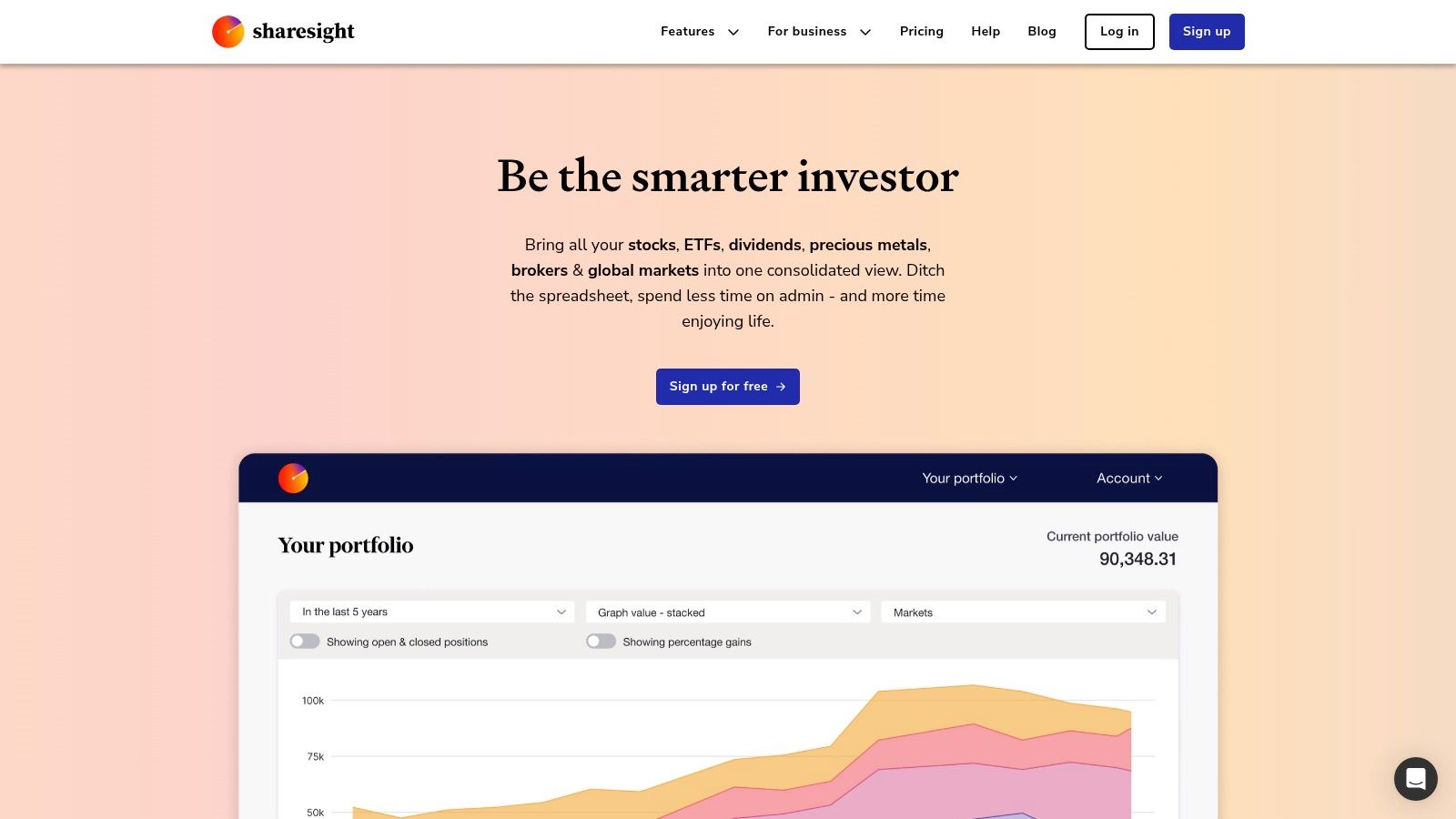
Sharesight makes sense when performance accuracy and income tracking matter more than research depth. It's built for investors who hold stocks and ETFs for the long haul, especially when dividends, DRPs, multi-currency holdings, and tax records need to be reconciled cleanly. That's a very different problem from thesis drift, but it's still a core portfolio monitoring job.
The platform records dividends automatically and calculates total return including income, which is where many casual trackers fall short. It also handles multi-currency valuation and FX effects, so international investors can see what's really happening to results instead of flattening everything into one misleading number. For anyone who has tried to manage corporate actions and tax reports manually, that alone can save a lot of friction.
Best fit
Sharesight is best for buy-and-hold investors who want an accurate record of what happened, not a noisy stream of market opinions. It works especially well as a performance and tax complement to a separate research workflow. If your strategy is income-focused, this is one of the cleaner ways to keep reporting honest.
Limits to be aware of
Sharesight is not a full research terminal, and that's the point. It's better at measuring total return than evaluating whether a holding still fits a written investment thesis. That means it's useful for confirming whether a strategy played out as expected, but not as strong for asking whether the strategy itself is being violated.
For investors who care about dividends, tax treatment, and corporate actions, Sharesight is one of the most practical tools on the market. For those trying to catch thesis drift, it's a complement rather than the core monitor.
See the Monsa vs Sharesight comparison if you want to separate monitoring for discipline from monitoring for accounting.
5. Morningstar Investor
Morningstar Investor is the classic research-led portfolio monitor. It pairs portfolio tracking with Morningstar analyst coverage, fund and stock ratings, and diversification views, which makes it useful when you want context around your holdings instead of just a performance graph. That's particularly helpful for investors who own funds, ETFs, and a mixed equity book.
The strength here is independent research. Morningstar's ratings and analyst notes give you a way to interpret allocation, style, and sector exposure without building your own framework from scratch. For many investors, that's enough to catch obvious mismatches before they become expensive habits.
Where it fits
This is a strong option for people who want a single place to review holdings, watchlists, and diversification. It's also a good match for investors who don't want to spend their time maintaining custom rules. The platform handles research and monitoring in one environment, which keeps the workflow simple.
The trade-off
Morningstar Investor is more about research than active trade workflows. That makes it valuable for review and context, but less useful if you need fast, rule-based decisions every time a holding changes. Some of the deeper features are also tied to Premium, so the experience depends on how much of the platform you use.
If your portfolio is built around funds, style exposure, and research notes, Morningstar is a sensible monitor. If you're trying to enforce a strict process on individual stocks, a more explicit thesis engine will usually work better.
6. Seeking Alpha Premium
Seeking Alpha Premium appeals to investors who want portfolio monitoring tied directly to a high-volume research ecosystem. Broker-linked syncing reduces manual updates, while Portfolio Health Check and quant ratings surface how your holdings look against factor-based signals. That combination can be useful if you like to compare your thesis with a broader set of data-driven commentary.
The platform is especially useful when alerts are tied to both holdings and content. Price and dividend alerts can be paired with articles and event coverage, so you're not just notified that something moved, you're given reading material around the move. For many investors, that shortens the time from alert to review.
What it does well
Seeking Alpha works best for people who want a constant stream of signals and opinions around a portfolio. It's strong when you use it as a research-plus-monitoring hybrid. The quant layer adds structure, while the article ecosystem helps you sanity-check a thesis from multiple angles.
What can go wrong
The obvious risk is noise. If you follow many authors or many tickers, the platform can start to feel busy fast, and not every signal deserves action. The full value also depends on paid Premium access and, in some cases, separate add-ons.
Seeking Alpha Premium is a good fit for data-driven investors who don't mind a crowded information environment. If you want fewer inputs and a sharper verdict on whether a holding still belongs, a stricter thesis tool will feel cleaner.
7. Yahoo Finance Premium Portfolios AlphaSpace
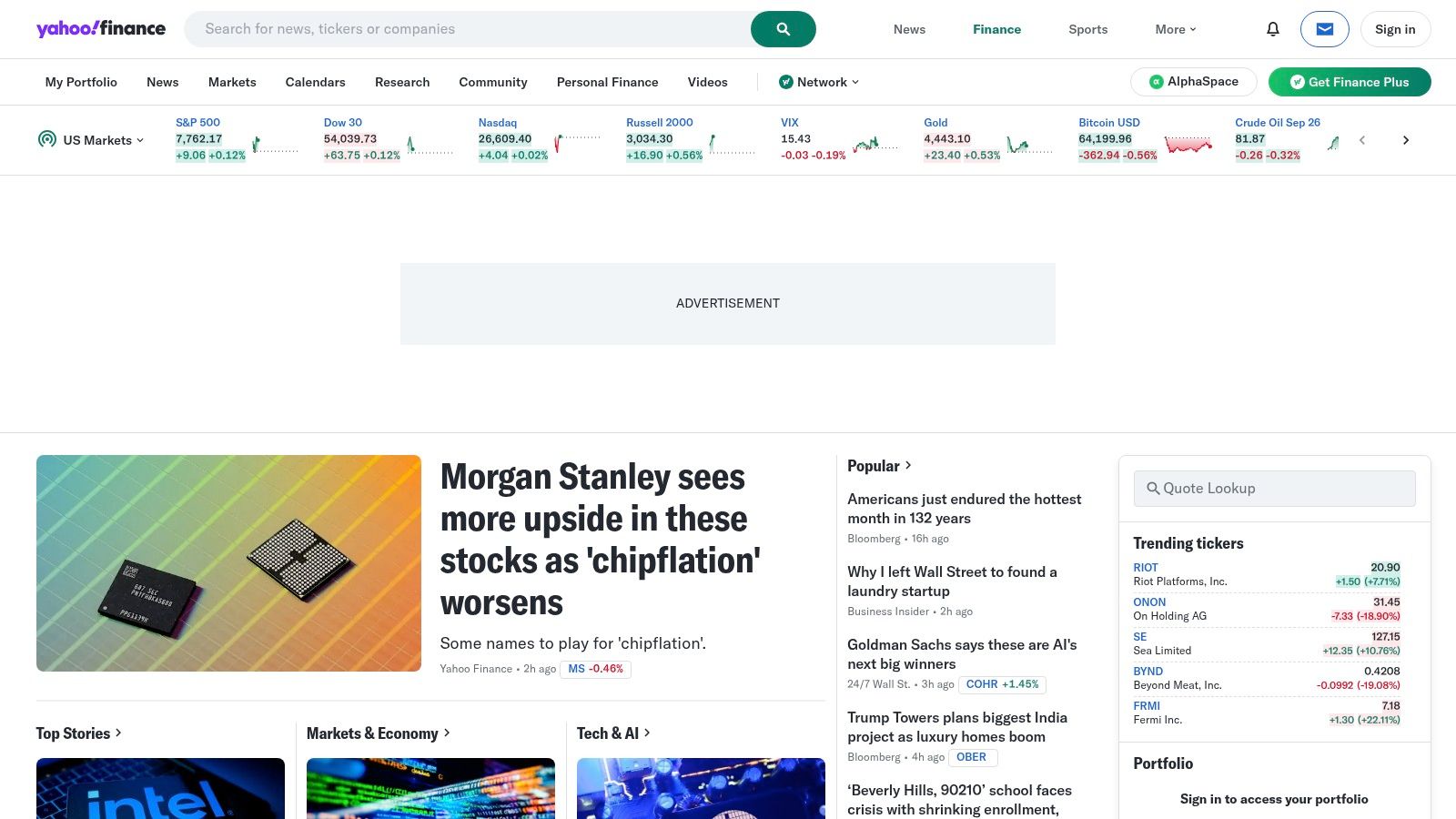
Yahoo Finance is still the easiest on-ramp for many investors, and its Premium portfolio features deepen that familiar experience. Linked brokerage portfolios, upgraded charts, screeners, alerts, and mobile feeds make it a low-friction way to monitor holdings without learning a new interface from scratch.
Why people keep using it
The main advantage is familiarity. Investors already know the Yahoo Finance layout, so the step up to Premium is less about changing behavior and more about getting slightly better tooling inside a platform they already visit. The AlphaSpace initiative also points toward tighter integration between portfolios, news, and AI-assisted features, which is the direction many retail users want.
Where it's weaker
This is still a convenience platform first. Brokerage linking depends on aggregators, and those connections can break, which is frustrating when you want a clean daily view of a portfolio. Some premium features vary by geography, so the experience isn't always consistent across users.
Yahoo Finance Premium Portfolios is good for investors who want an accessible, widely used dashboard with stronger analytics than the free version. It's less convincing as a serious thesis monitoring system, because convenience is the product's core strength, not rule enforcement.
8. Empower Personal Dashboard
Personal Dashboard is the most useful no-cost consolidation layer for many investors. It aggregates accounts, shows allocation and performance summaries, and extends beyond investments into net worth and retirement planning. That makes it a practical choice for people who want a single pane of glass across brokers, retirement accounts, and overall household finance.
The appeal is straightforward. You get a broad view without paying for a research terminal, and the dashboard is useful for checking whether your overall allocation still matches your intent. For investors who care about the full balance sheet, that's a real benefit.
Where it helps most
This household monitoring tool excels at showing what you own, how it's allocated, and how it fits into retirement planning. If your real problem is "I have accounts everywhere and no clean picture of the whole," this solves that pain better than many higher-priced platforms.
Where it falls short
It does not go deep on security-level fundamentals, so it won't replace a research tool or a thesis-aware terminal. The platform also changed substantially after the Personal Capital migration, so users should judge it by the current experience, not by older reputation alone.
A smart choice for broad financial monitoring and net-worth tracking. It's not the best answer when the question is whether a specific holding still matches a written strategy.
9. Kubera
Kubera is a premium net-worth tracker for investors who want one clean view across listed and alternative assets. Brokerages, cash, private assets, real estate, domains, and crypto can all sit in the same balance-sheet style interface, with daily pricing and FX conversion helping keep the numbers current. That makes it especially useful if your portfolio extends beyond public equities.
The product's design philosophy is obvious from the first use. It's fast, visually clean, and geared toward frequent check-ins rather than research-heavy exploration. For investors who manage a mix of holdings, that simplicity is a real advantage.
Best for mixed books
Kubera works well when a portfolio spans several asset types and the main job is valuation, not security selection. It's particularly strong for people who want to keep alternative assets visible without juggling multiple apps. The API and documentation also make it friendlier to users who care about integration.
What to keep in mind
Kubera is not a research terminal. It won't help you decide whether a stock still fits a quality or value thesis, and it won't replace a fundamentals workflow. It is also paid-only, so the value has to justify the subscription.
For mixed-asset investors, Kubera is one of the cleanest ways to monitor overall wealth. For thesis drift, it's more of a wealth console than a discipline engine.
10. Quicken Classic Premier
Quicken Classic Premier is for investors who still want local desktop control and detailed records. It offers portfolio views, gain reporting, dividend tracking, tax-lot analysis, and Morningstar-powered Portfolio X-Ray, which makes it especially useful for people with long histories and multiple accounts. It feels more like a recordkeeping system than a browser-based monitor, and that's exactly why some investors prefer it.
Why it still matters
Quicken is strong when you need auditability and historical continuity. Tax-lot selection and capital gains tools give the platform real utility for long-term investors who don't want to lose track of basis or realized gains. It's also a good fit for people who prefer desktop software over always-on cloud tools.
Where it's less comfortable
The learning curve is real, and some of the best investment reports sit in the Premier tier rather than lower plans. Cloud sync is optional, which gives you control, but it also means the workflow feels more traditional than modern SaaS tools. That's fine if you like explicit ownership of your data, less fine if you want easy collaboration.
Quicken Classic Premier is best for investors who care about records, tax lots, and detailed reporting. It's less compelling for strategy enforcement, but it remains a credible monitor for people who treat portfolio administration as part of the job.
Top 10 Portfolio Monitoring Tools Comparison
| Product | Core focus / Unique features (✨) | Quality (★) | Target audience (👥) | Pricing / Value (💰) |
|---|---|---|---|---|
| Monsa 🏆 | ✨ Natural-language strategy capture; nightly 0-100 fit scores; matrix view; 10 strategy templates; a monthly AI analysis pool | ★★★★★ | 👥 Self-directed investors, indie PMs, small RIAs, thesis-driven stock pickers | 💰 See the Monsa pricing page |
| Koyfin | ✨ Multi-asset analytics; rich alerts, transcripts & model portfolios; desktop + mobile | ★★★★☆ | 👥 Active equity investors, advisors needing market context | 💰 Free + paid tiers; advisor features gated |
| Stock Rover | ✨ Extensive fundamentals (400 to 800+ metrics); powerful screeners; broker sync | ★★★★★ | 👥 Fundamentals-driven investors and advisors | 💰 Tiered paid plans; scales to advisors |
| Sharesight | ✨ Automated dividend/DRP handling; multi-currency total-return & tax reports | ★★★★☆ | 👥 Buy-and-hold investors needing income & tax reporting | 💰 Paid plans for higher holdings; free trial |
| Morningstar Investor | ✨ Analyst reports, star/medalist ratings; portfolio/diversification tools | ★★★★☆ | 👥 Investors seeking independent research and fund analysis | 💰 Premium subscription for full features |
| Seeking Alpha Premium | ✨ Community analysis + quant ratings; broker linking; Portfolio Health Check | ★★★★☆ | 👥 Data-driven investors who follow articles/quant signals | 💰 Premium subscription; optional add-ons |
| Yahoo Finance Premium (AlphaSpace) | ✨ Linked brokerage portfolios; upgraded charts, screeners, mobile apps | ★★★★☆ | 👥 Casual to active investors wanting familiar UI & mobile access | 💰 Some free; premium plans/features vary by region |
| Empower Personal Dashboard | ✨ Free aggregation, fee analyzer, retirement planner & net-worth view | ★★★☆☆ | 👥 Users wanting consolidated free dashboard and retirement tools | 💰 Free core features; paid advisory options |
| Kubera | ✨ Multi-asset net-worth tracker (real-estate, crypto, private assets); daily FX/pricing | ★★★★☆ | 👥 Investors with mixed/alternative assets seeking clean balance sheet | 💰 Paid premium subscription (positioned above basic trackers) |
| Quicken Classic Premier | ✨ Desktop IRR/ROI, tax-lot management, dividend reports, Portfolio X-Ray | ★★★★☆ | 👥 Long-term investors needing local records, tax-lot control | 💰 Paid desktop license (Premier tier); optional cloud sync |
How to Choose the Right Tool for Your Strategy
The best portfolio monitoring tool is the one that matches your decision style, not the one with the longest feature list. If your edge depends on a strict written process, a thesis-aware system like Monsa is a clean way to keep positions honest. If your priority is total return, dividend income, and tax reporting, Sharesight or Quicken may fit that workflow better.
If you want research context and broad market visibility, Koyfin, Morningstar Investor, and Seeking Alpha Premium give you more information to work with, but they also create more noise. That can be useful for active readers and dangerous for investors who already know they're prone to overreacting. For people who want a household view or mixed-asset consolidation, Empower and Kubera solve a different problem entirely, the problem of seeing everything in one place.
The practical test is simple. Connect one portfolio, live with the workflow for a week, and ask whether the tool reduces decision friction or just creates prettier dashboards. If the answer is that it helps you separate fits, borderline, and violates with less guesswork, you've found the right monitor for your strategy.
If you're trying to stop thesis drift before it turns into process drift, Monsa is built for exactly that job. It stores your strategy, scores every holding against it nightly, and makes the verdict visible instead of leaving you to infer it from charts. Visit Monsa if you want a portfolio monitoring tool that treats discipline as the product, not an afterthought.
Monsa is a portfolio-analysis tool, not a broker or investment adviser. Nothing here is investment advice.
// related reading
What Is Portfolio Turnover and Why It Matters
What is portfolio turnover? Learn the SEC formula, worked examples, costs, taxes and benchmarks to judge if trading fits your strategy.
Watchlist Management: A Step-by-Step Guide for Traders
Master watchlist management with actionable steps to create, score, and prioritize your stock list. Learn thesis alignment and alerts setup for better
Florida Unemployment Amount: What You Will Actually Receive
Learn how the Florida unemployment amount is calculated, the $275 weekly cap, duration rules, and how partial earnings change your payment in 2026.
7 / 100 founding seats claimed - $100/yr locked, then $190/yr
Monsa is a portfolio-analysis tool, not a broker or investment adviser. It never recommends what to buy or sell - it checks what you hold against rules you wrote. Nothing here is investment advice.